Jewish Jerusalem
Before modern nationalism, Jews were already central to Jerusalem’s life and demography.

William Bartlett, 1844
Before modern nationalism, Jews were already central to Jerusalem’s life and demography.
The antizionist claim is that Jews were too small a presence in pre-Zionist Palestine to have a real claim to the land. Even setting aside everything in the previous facts about why that population was small, the argument doesn’t hold for Jerusalem.
By the 1890s — a quarter-century before the British took control — Jews were the majority in Jerusalem.
If democratic elections had been held, Jerusalem would have had Jewish leadership. And that was always a red line for the hereditary Muslim leadership.

By 1844, Jews were already the largest single group in the city. By the 1890s, they were a clear majority — and they would remain so through the end of Ottoman rule, through the British Mandate, and after the founding of Israel.
This was not a result of Zionist immigration. The Jewish majority in Jerusalem predates the First Aliyah. It is the demographic record of the Old Yishuv — the continuous Sephardic, Mizrahi, and small Ashkenazi communities that had been there for centuries — finally outnumbering the populations that had been brought in or grown around them.
The argument that Jews made up a small fraction of Palestine’s overall population in 1947 misses the point. Jerusalem is what a good part of the conflict with the Arab world is about. And Jerusalem was already a Jewish city.
What happens when Jews have lacked equal rights in Jerusalem can be seen across the centuries.
Throughout the 1,100 years of Muslim rule over Jerusalem, Jews were expelled at least three times. In 1948, the Jewish community of Jerusalem came under siege for three months. Their survival was uncertain.
When Jordan took East Jerusalem during that war, the Jews of the Old City were expelled. The ancient Jewish Quarter was demolished. Thirty-four synagogues were destroyed. On the Mount of Olives, 38,000 Jewish graves were desecrated — many of the headstones used to pave Jordanian roads and latrines.
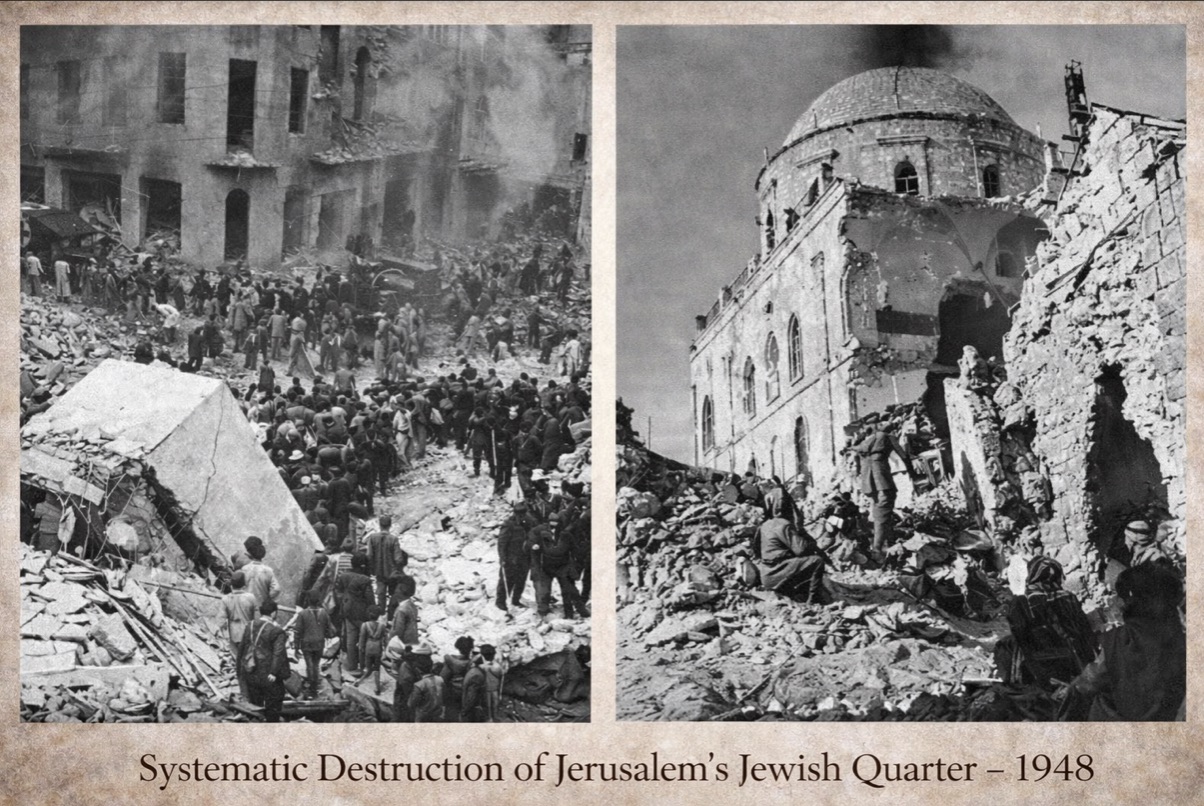
The antizionist account treats Jewish claims to Jerusalem as a modern political project. The demographic record shows the opposite: Jews were the largest group in Jerusalem before the Zionist movement even existed.
The modern political project that the Jews of Jerusalem were concerned with in the pre-state period was asserting their rights. When they persisted in praying at their holiest site, the Western Wall, they ran into Arab resistance. Palestine’s Arabs feared that it would only be a matter of time before the Jews attempted to reclaim the Temple Mount, where the Al-Aqsa Mosque sits upon the former grounds of the Holy Temple.

This dispute has been central to the Arab-Jewish conflict for the past 100 years. For Palestine’s Jews, it became evidence that their rights wouldn’t be respected without power to back them up.