Jews Are
From Judea
Judaism isn’t just a religion. It’s the culture of a people from a place — and the genetic, linguistic, and ritual evidence proves it.

The Flight of the Prisoners
Judaism isn’t just a religion. It’s the culture of a people from a place — and the genetic, linguistic, and ritual evidence proves it.

There’s an answer to who Jews are, and it’s quite simple. We don’t have to sit here and be like, are Jews a race, a religion, a nationality? It’s like, no.
Jews are a type of social group that was common in the ancient Near East and is very uncommon in the west today. They’re a joinable tribal group with a shared history, homeland and culture.
What I just said is a paragraph in English and in Hebrew it’s one word that’s two letters long: Am (nation).
Jews are Am Yisrael (Nation of Israel), and unless you understand what that means, nothing else makes sense.”
From Being Jewish with Jonah Platt

Can Jews alive today still claim a connection to the ancient land? Two facts make the case. Jews were historically encouraged to marry within the faith. And for most of its history, Judaism wasn’t a proselytizing religion — even converting of one’s own volition is a difficult, laborious process.
That means most Jews alive today are not just spiritually descended, but biologically related to the Jews who lived in ancient Israel. That’s why Jews from places as far apart as Poland, Yemen, Morocco, and Iran still share close genetic links, linguistic roots, core rituals, and a historical anchor in the land of Israel.
The differences between Jewish communities are real. But if you peel back the layers, Jews are one people, from one place. This is the basis of Jewish indigeneity to Israel.
The United Nations has never published a single legal definition of “indigenous.” What it does use is a working framework — six criteria, drawn from Martínez Cobo’s 1986 study and reaffirmed by the UN Permanent Forum on Indigenous Issues.
Apply it to Jews as a people, and every box is ticked. This is not rhetoric. It’s the rubric the UN uses to recognize everyone from the Māori to the Sāmi to the Navajo. Jews meet it as cleanly as any people on earth.
| UN Criterion | Applied to the Jewish People |
|---|---|
| Self-identification as a distinct people | Continuous self-identification as Am Yisrael — the people of Israel — across all diasporas and centuries |
| Historical continuity with pre-colonial societies | Documented presence in Judea since the Iron Age; unbroken ritual, legal, and linguistic inheritance through exile |
| Strong link to ancestral territories | Hebrew prayer, the ritual calendar, pilgrimage traditions, and dietary law are all geographically specific to the Land of Israel |
| Distinct social, economic, or political systems | Communal self-governance (kahal) maintained across exile; a distinct legal system (halakha) applied continuously |
| Distinct language, culture, religion, and beliefs | Hebrew language; Jewish law; religious and cultural practice inseparable from land-based origins in Judea |
| Non-dominant group with resolve to maintain collective identity | Minority under foreign rule for nearly 2,000 years; identity preserved through deliberate practice and community structure |
Source: Martínez Cobo, “Study of the Problem of Discrimination Against Indigenous Populations,” UN Doc. E/CN.4/Sub.2/1986/7/Add.4 (1986); UN Permanent Forum on Indigenous Issues.

If Jews are a people from a place, why does the world treat them like they’re just a religious group?
Across 19th-century Europe, Jews were finally being offered civil rights and citizenship — but with strings attached. The modern state had no idea what to do with a people who had multiple identities. There was no category for “Judean with French papers.” So if Jews wanted to enter modern life, they had to agree to be only a religion, the way Christianity was a religion — a set of beliefs, separate from ethnicity or land.
The way that Europe came to its modern religious identity was through conversion. And Jews, who didn’t want to be seen as foreigners in the lands where they lived, stopped talking about their peoplehood and started talking about Judaism as a religion like Christianity.
This trade had benefits — restrictions on where Jews could live and work were relaxed. They could own land. They could hold public office.
But this way of talking about Judaism had costs. It’s why much of the secular West — especially the parts that have moved past Christianity but still inherit its categories — can’t quite process Jews as a people. And if you can’t see Jews as a people, their relationship with their homeland can start to resemble Christian missionary colonialism or Manifest Destiny.
Indigenous religions are the practices of people from a region. There is a Lenape religion, but it isn’t thought of as distinct from the Lenape people, and it isn’t something people in England are converting into. Judaism works the same way — except that 200 years of European reclassification has obscured this.
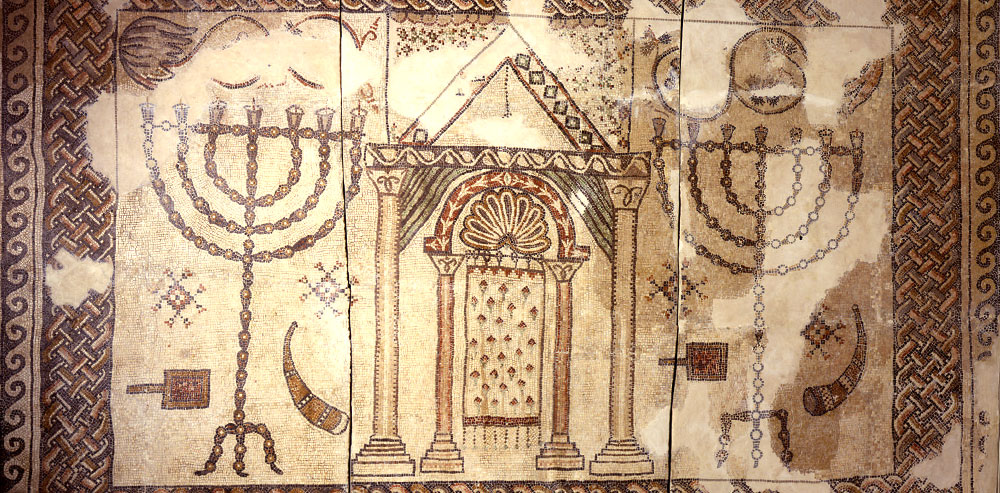
When Jews are understood as a people from a place, the “settler colonialism” accusation collapses. You can’t colonize the land you’re from.
You can argue about the politics of return, the ethics of statehood, the rights of others who live there. Those are real arguments worth having.
But the premise that Jews arrived in Palestine as foreign colonizers is historically false — and it distorts every conversation that follows from it.